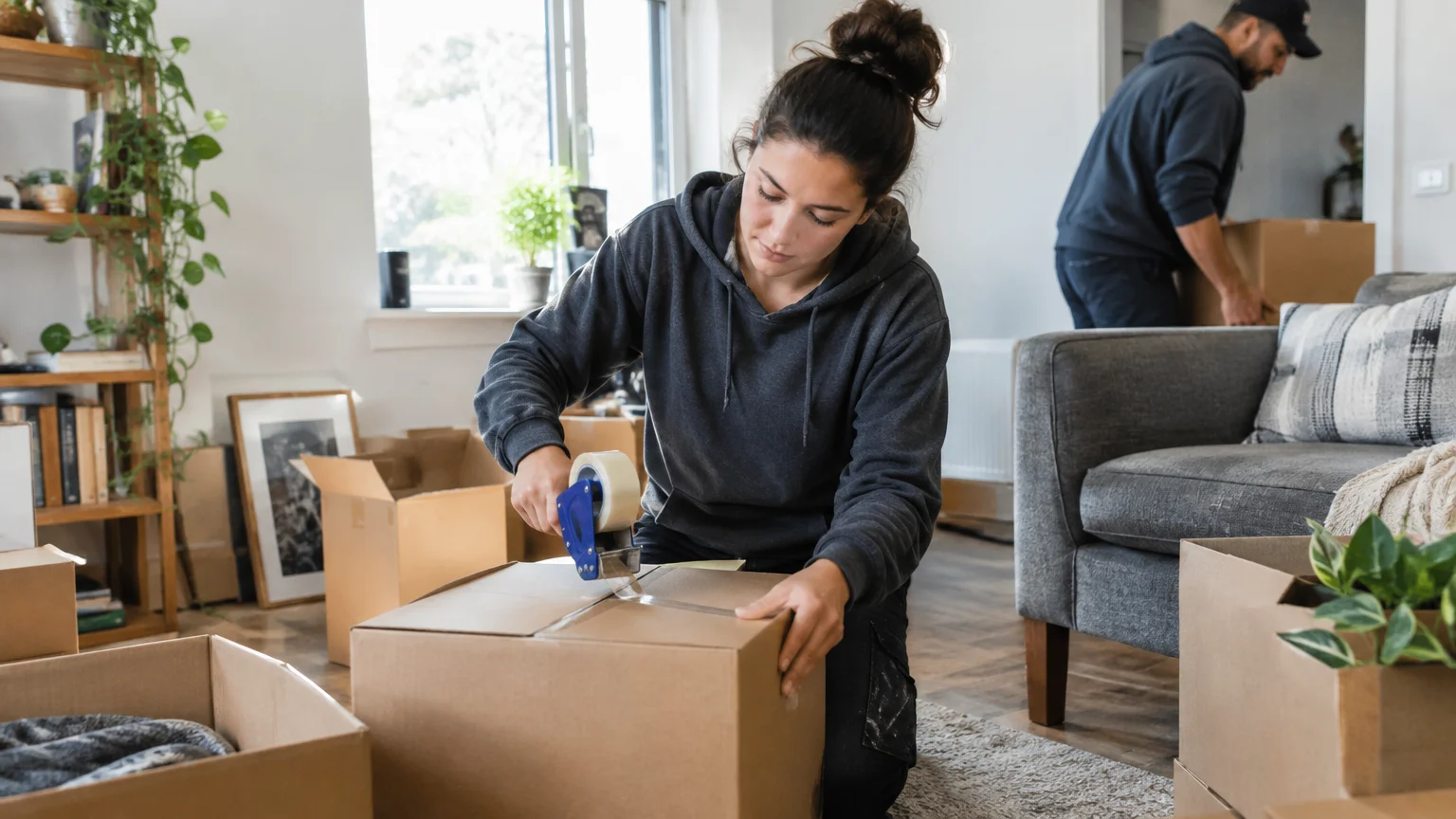
Knowing what to do with moving boxes helps you clear your home safely after unpacking. Keep clean, dry boxes for reuse or donation. Flatten sound cardboard for recycling. Separate wet, greasy, moldy, or unsafe boxes from clean materials. A simple plan helps Battle Creek households reduce clutter and waste.
What should you do with moving boxes after unpacking?
After unpacking, sort boxes into three groups: reuse, recycle, and disposal. This keeps good cardboard away from damaged waste. It also gives you a clear final step after moving day. What to do with the rest of your home can then happen room by room.
Check each box for dry sides, clean surfaces, and firm corners. Keep boxes that still hold their shape. They may help with storage, a future move, holiday items, or donations. Small boxes can also protect books, tools, and breakable items in a closet or garage.
Put worn boxes in a recycling pile. A box does not need to look perfect for recycling. It should be dry and free from food, oil, and heavy dirt. Keep packing paper and clean paperboard nearby if the local program accepts them together.
Some packing items need different handling. Foam sheets, plastic wrap, air pillows, tape, and plastic bags may not belong with cardboard. Check local waste rules before placing these items in a recycling bin. Battle Creek residents may find that nearby communities use different collection rules.
How to sort boxes for reuse, recycling, or disposal
A quick check makes sorting easy. Use these signs as a guide:
- Reuse: The box is clean, dry, sturdy, and free from pests or strong smells.
- Recycle: The box is plain cardboard with small tears but no wet or greasy areas.
- Dispose: The box is soaked, moldy, oily, badly stained, or unsafe to touch.
Remove labels with private details before giving boxes away. A label may show a name, address, or tracking code. Cross out those details or cover them with paper before donation.
When should you break down cardboard boxes?
Break down each box when it no longer holds items. Flattening saves space and makes the pile easier to move. Pull away large pieces of tape first. Then fold the box along its seams when possible.
Do not leave flattened boxes outside in rain. Wet cardboard becomes heavy and may not be accepted for recycling. Keep it in a dry place until collection day or a drop-off trip.
Can you reuse or donate moving boxes?
Yes, clean moving boxes can often be reused or donated. Reuse works best when a box stays strong and shows no signs of water, insects, or mold. Donation also helps another household find packing supplies.
Empty every box before offering it to someone else. Check the bottom for weak seams or crushed corners. A box that breaks when lifted can damage belongings or cause an injury. Recycle a weak box instead of passing the problem to another person.
Boxes can serve many purposes after a move. They can hold seasonal decorations, clothing, crafts, pantry items, or goods waiting for storage. Small boxes suit books and canned goods because they are easier to lift. Large boxes work better for pillows, blankets, and other light items.
Battle Creek Michigan Movers helps homeowners, tenants, and business owners plan the last part of a move. For an office, strong boxes may hold files or supplies during a room change. Businesses should protect private records and follow their document rules before giving boxes away.
Best ways to reuse boxes at home
Reuse boxes only where they will stay dry and easy to reach. Add a clear label so the contents do not become forgotten clutter. Avoid stacking heavy boxes high in garages, attics, or closets.
Moving blankets, paper, and bubble wrap may also have another use. Clean paper can protect stored items. Plastic wrap can group loose parts, but keep it away from children and pets. Store all packing items away from paths and heat.
Where to donate clean, usable moving supplies
Offer boxes through a local group, neighborhood exchange, school, shelter, charity, or reuse center. Some places accept packing paper and other supplies. Others accept boxes only. Ask before visiting and explain the box size and condition.
Bundle similar boxes with light twine. Do not use a sealed bag that hides damage or pests. A short, honest description helps the next person decide if the supplies fit their move.
How should you recycle cardboard after a move?
To recycle cardboard, empty each box, remove non-cardboard parts, flatten it, and keep it dry. Small amounts of tape may remain, but remove large plastic, foam, and metal pieces. The local recycling program sets the final rules.
Cardboard recycling works best when the material stays clean. Food, grease, paint, cleaning products, and soil can spoil a larger load. A clean box with a small tear is usually better for recycling than a stained or soaked box.
Check city or county waste rules before setting out unusual items. Some programs accept corrugated cardboard at the curb. Others ask residents to bundle boxes, cut them into smaller pieces, or use a drop-off site. Serving the main Battle Creek area, from Lakeview and Verona Park to Springfield, Marshall, Union City, Assyria, and nearby communities, may mean checking more than one local rule.
Do not leave cardboard beside a bin if extra material is not allowed. Wind can spread it across roads and yards. Keep the stack tied or contained until the correct collection time.
How to prepare cardboard for recycling
Use this simple order:
- Empty every box and remove loose packing material.
- Pull off large plastic, foam, and metal pieces.
- Tear away parts with food, oil, paint, or heavy dirt.
- Flatten the clean cardboard to save space.
- Keep it dry until pickup or drop-off.
Local rules come first, even when only a little tape remains. Remove thick tape when it is easy to do. Do not spend a long time trying to fix badly damaged cardboard. Unsafe or dirty pieces belong in the proper waste stream.
What should you do with damaged, wet, or contaminated boxes?
Separate wet cardboard from clean cardboard. Drying it may not restore its strength or make it suitable for recycling. Handle moldy cardboard with care and keep it away from clean packing supplies.
Greasy or food-stained cardboard can spoil other paper. Boxes that held chemicals, paint, or unknown liquids may need special instructions. Read the product label and ask the local waste authority when the contents are unclear.
Wear gloves when handling dirty boxes, then wash your hands. If a box has insects, droppings, or a strong odor, keep it away from living areas. Do not donate it or mix it with clean supplies.
How can you finish unpacking without creating more clutter?
Clear packing material as each room becomes useful. Open needed boxes first, put items away, and move empty cardboard to one sorting area. This keeps boxes from spreading through the home for weeks.
A useful order starts with the bedroom, bathroom, kitchen, and work area. Once these spaces work well, unpack less urgent items at a steady pace. Tenants can keep a few boxes aside until they check walls, floors, and appliances for damage.
Do not throw away important papers or small parts by mistake. Keep keys, manuals, receipts, a moving estimate, and move papers in one labeled folder. Photograph damage before discarding packing material if a moving claim may be needed.
A moving claim is a formal request for help after belongings are lost or damaged. The mover’s paperwork explains the notice steps. Keeping photos, labels, and records can make the process easier.
What is a practical plan for clearing packing materials?
Use one box, bin, or corner as the packing-material station. Keep cardboard, paper, plastic, and reusable supplies in separate groups. Empty that station at the end of each day or after each major room.
Keep paths, stairs, and exits clear. Flatten boxes before moving them, and ask for help with large bundles. Simple sorting is usually safe for a homeowner. Heavy lifting, high stacks, and awkward loads may need help from a professional. Loading & Unloading Help can help a household that needs extra hands without a full move.
What should you keep for future moves and what should you let go?
Keep only supplies that are clean, strong, and easy to store. A small, neat set is more useful than a large pile. Label the storage container and place it somewhere dry.
Let go of boxes that are weak, wet, stained, or hard to store. Recycle clean cardboard when possible and follow local rules for everything else. A future move will be easier when supplies are grouped and ready.
Key takeaways
- Sort boxes into reuse, recycling, and disposal groups.
- Keep clean, dry, sturdy boxes for reuse or donation.
- Flatten cardboard and protect it from rain before recycling.
- Separate wet, greasy, moldy, or chemical-stained materials.
- Keep move records and photos until damage concerns are settled.
Conclusion
Unpacking does not end when the last item leaves a box. A careful sorting plan clears the home, protects useful supplies, and sends cardboard to the right place. Clean boxes can help another household, while damaged materials need safe handling.
Battle Creek Michigan Movers supports moving needs for homes and businesses. Contact us to discuss moving help and request a quote.
Frequently Asked Questions
Can moving boxes go in curbside recycling?
Often, clean and dry corrugated cardboard can go in curbside recycling. Each local program sets its own rules, however. Flatten boxes and remove large plastic, foam, and metal pieces. Keep wet, greasy, moldy, or chemical-stained cardboard out of the clean pile.
How long should someone keep moving boxes?
Keep boxes while they serve a clear purpose. A household may save strong boxes for storage, returns, or another planned move. Recycle or discard boxes when they become weak, damp, damaged, or unsafe to store.
Can packing paper and bubble wrap be recycled with boxes?
Not always. Plain packing paper may follow paper recycling rules. Bubble wrap and plastic film often need a separate drop-off option. Keep these items apart from cardboard and check the local waste program before using a curbside bin.
What should happen to boxes after a moving claim?
Keep damaged boxes, labels, and packing material until the mover gives clear instructions or the claim is settled. Take photos before throwing anything away. Review the move agreement and keep copies of related records.
If you are not sure what you are dealing with, it is worth having someone look at it before it turns into a bigger job. Get in touch with Battle Creek Michigan Movers today and we will tell you where you stand.